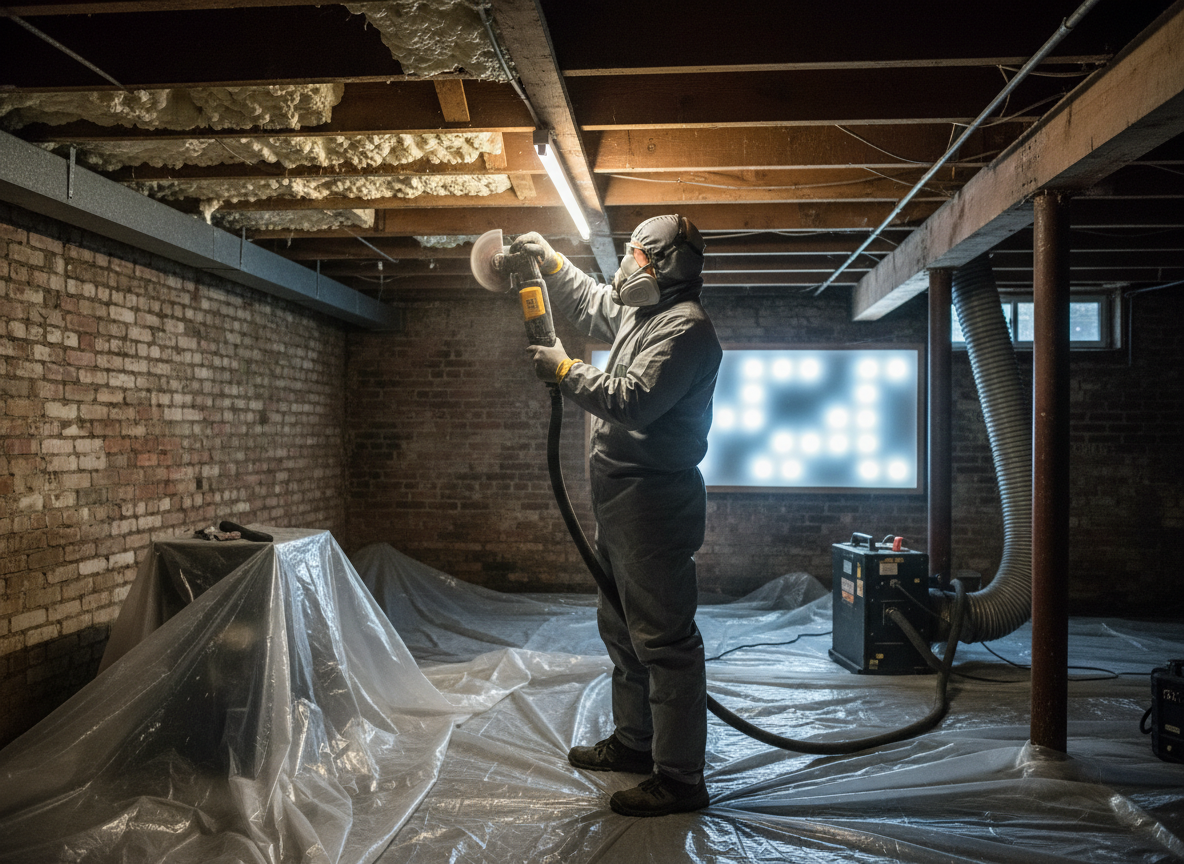
Spalding homes built before the 1960s often carry thick layers of spray foam in lofts that trap moisture against the clay-tiled roofs common along the River Welland corridor. Our crews reach these properties via the narrow lanes off the High Street and Pinchbeck Road, where low eaves and shared access points require hand removal rather than mechanical stripping to avoid damaging original timbers.
Winter fog and high water tables in the fens mean insulation removal here must include full drying checks before any new work. We park the van at the rear of Ayscoughfee Hall properties or near the Grammar School playing fields when jobs run overnight, keeping disruption low for residents on streets like Double Street and Chapel Lane.
Local roof voids in Spalding frequently show foam adhesion to asbestos-cement sheeting still present on many terraces. Each removal includes careful bagging and off-site disposal so the job finishes with the loft left clean and ventilated for the next stage.
Around Spalding
We regularly work near:
- 📍Ayscoughfee Hall
- 📍Spalding Grammar School
- 📍River Welland
- 📍Springfields Outlet Shopping
- 📍St Mary and St Nicolas Church
- 📍Spalding Railway Station
Spray Foam Removal Boston in Spalding — Local Notes
- •Fenland drainage means many Spalding lofts sit above properties with rising damp; foam must come out completely before ventilation upgrades.
- •Narrow rear access on streets like Winfrey Avenue limits equipment size, so removal stays manual to protect garden walls and shared boundaries.
- •Older school buildings and converted warehouses near the railway station often have foam over metal decking that needs extra care during cold-weather stripping.
- •Springfields area homes face stronger winds across open fields, so post-removal checks focus on ridge vents that previously failed under foam pressure.