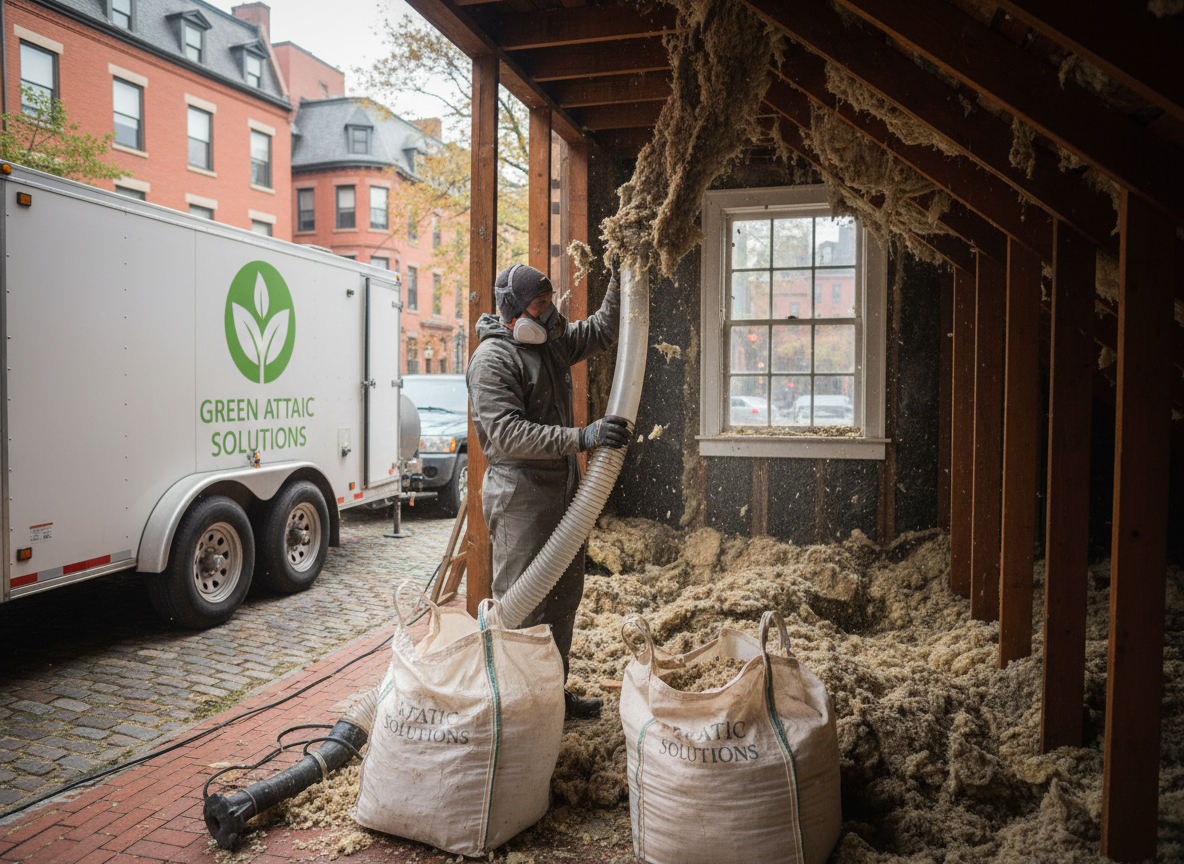
Spray foam installed in Boston homes often bonds tightly to brick and timber in Victorian terraces around the marketplace and along South Street. Removing it without damaging original lime mortar or releasing particulates requires controlled mechanical scraping combined with low-VOC solvents that break down polyurethane bonds. Lincolnshire's frequent rainfall and high water table mean foam in cavity walls frequently traps moisture against the inner leaf, so crews must first isolate sections to prevent water migration into living spaces during extraction.
Older properties in Boston and nearby villages such as Wyberton and Kirton commonly have narrow cavities and irregular brickwork that trap foam in pockets behind electrical runs and pipework. An environmentally friendly approach uses HEPA-filtered vacuums and manual tools rather than high-pressure blasting, reducing dust that could settle in neighbouring gardens. Workers also check for asbestos-containing artex ceilings or lead paint common in pre-1960s stock before disturbing insulation layers.
Disposal follows Environment Agency rules for polyurethane waste, with material bagged and taken to licensed facilities rather than local landfill. In fenland areas where soil movement occurs seasonally, crews inspect for cracks that may have formed after foam was originally injected, then advise on breathable replacement insulation suited to the region's damp climate. This prevents repeat issues once the old material is gone.
Technician insight
In Boston, the thing that catches most people out with environmentally friendly insulation removal is how the damp fenland air has let older foam absorb water behind the brickwork in terraces near the river, so what looks like a simple scrape job often turns into a slow, careful peel to avoid pulling the lime pointing apart.
Terraced house near Boston marketplace
Foam injected into a 1930s terrace had trapped moisture against the inner wall, causing musty odours. Inspection revealed pockets behind original timber laths. We sectioned the work, used solvent gel to release the material, extracted it by hand, and cleared the cavity without disturbing the external brick face. The homeowner could then install breathable insulation suited to local conditions.
How it works
- 1
Initial Inspection
Survey the property to map foam locations, check for hidden moisture, and identify any original building features that must be protected.
- 2
Site Preparation
Seal off rooms, lay protective sheeting, and set up negative-pressure extraction to contain dust and debris.
- 3
Controlled Removal
Use hand tools and approved low-impact solvents to loosen and extract foam in sections while monitoring for hidden services.
- 4
Waste Handling
Bag material on site and transport to licensed disposal points in line with local regulations.
- 5
Final Clean And Check
Vacuum residues, inspect cavities for remaining foam, and leave the space ready for follow-on works.
Pricing
Cost depends on access, depth of foam, and property age; quotes provided after inspection.