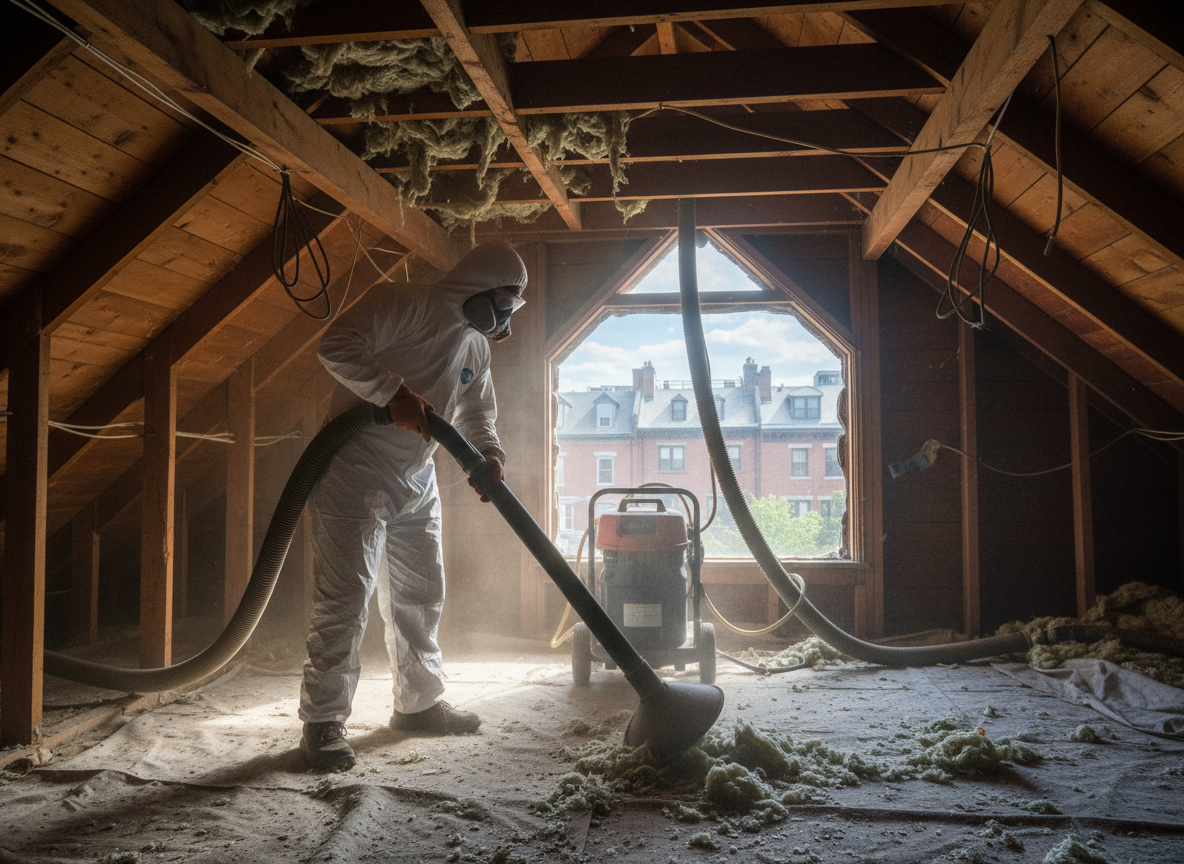
Boston Lincolnshire properties often feature Victorian terraces and early 20th-century homes with pitched roofs and narrow loft voids. Spray foam applied directly to rafters traps moisture against timber in this fenland climate, leading to rot that only becomes visible once the foam is cut away. Removal crews must work in confined spaces while protecting original lath and plaster ceilings below, using negative air machines to prevent dust migrating into living areas.
Edge cases include foam that has bonded to electrical cables or pipework running through the roof space. Technicians isolate circuits first and document every junction before mechanical scraping begins. UK building regulations require waste foam to be classified as non-hazardous or hazardous depending on its age and additives, so each load is weighed and logged for licensed disposal rather than sent to standard landfill.
Homeowners frequently discover that previous foam installations blocked ventilation paths at eaves and ridge, creating condensation problems that worsen after removal. The job therefore includes restoring airflow with new soffit vents or ridge tiles once the foam is gone. In terraced streets near the town centre, access is limited to rear alleys, requiring smaller equipment and careful coordination with neighbours.
Water ingress from the River Witham catchment area can saturate foam from below, turning a straightforward strip-out into a phased removal where sections are tackled only after drying. Crews carry moisture meters to confirm substrate dryness before finishing, preventing callbacks from hidden damp that would otherwise reappear within weeks.
Technician insight
In Boston the thing that catches most people out with insulation removal service is how often the foam has hidden rot along the eaves on 19th-century terraces near the market place. Once you start pulling it back you find the rafter ends are already soft because the original ventilation was blocked years ago, and that changes the whole job from a simple strip-out to a timber repair before you can even think about re-insulating.
Loft Foam Removal In A South Street Terrace
Homeowner noticed musty smells and ceiling stains after heavy winter rain. Survey found spray foam bonded to rafters with widespread damp along the front eaves. Crew removed the foam in sections, treated affected timber and restored eaves ventilation. Property now has dry loft space and no recurring condensation.
How it works
- 1
Site Survey And Risk Assessment
Technicians attend the Boston property to map foam locations, check for asbestos, electrical runs and structural timber condition before any work starts.
- 2
Containment And Dust Control
Plastic sheeting and negative pressure units seal the loft from the rest of the house, protecting carpets and furniture in homes around South Street and Wide Bargate.
- 3
Mechanical Removal
Foam is cut and scraped from rafters using specialist tools, with all debris collected in sealed bags for immediate removal from site.
- 4
Ventilation Restoration And Final Clean
Eaves and ridge vents are cleared or reinstated, followed by thorough vacuuming of the loft space and a final moisture check.
Pricing
Cost depends on loft size, foam thickness and access difficulty in Boston properties; quotes are provided after the initial survey.