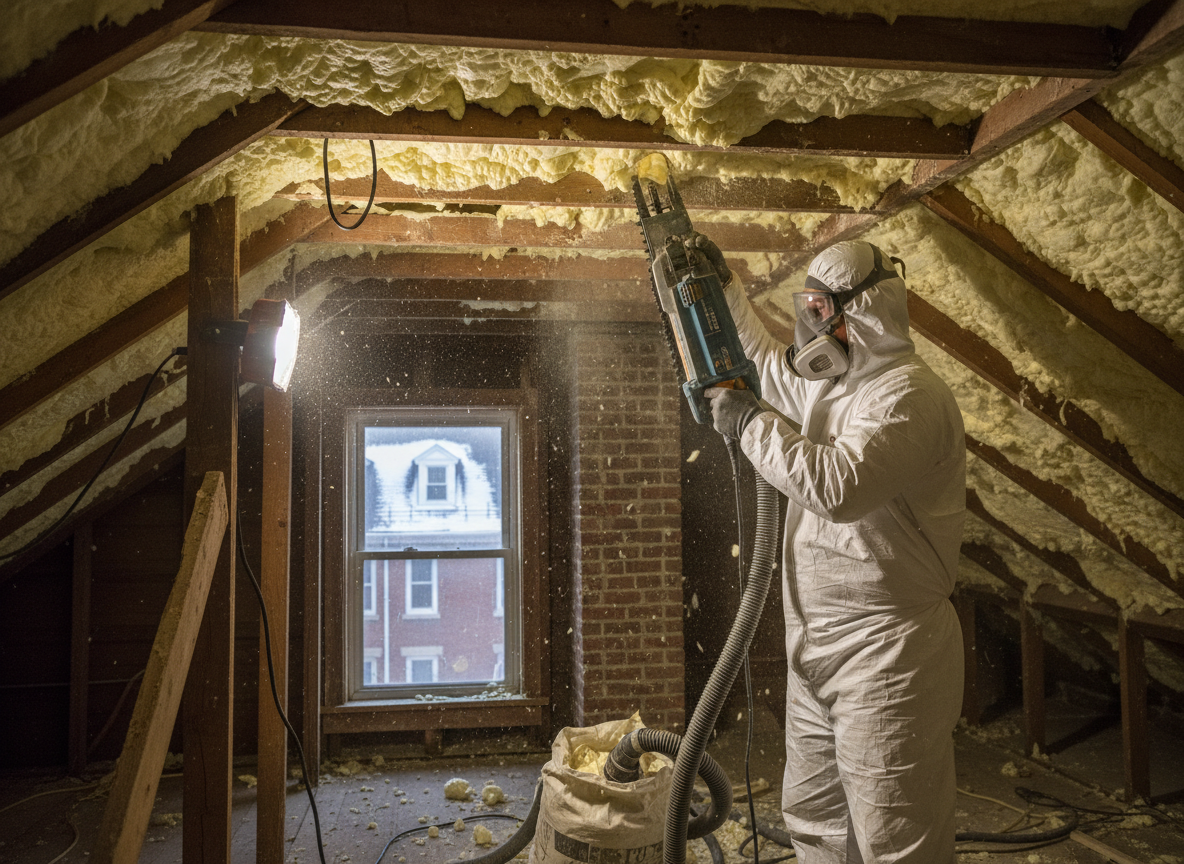
Open cell spray foam bonds tightly to joists and brickwork common in Boston properties built before 1950. Removal requires careful scoring and mechanical separation to avoid tearing original lath and plaster ceilings or damaging rafters in Victorian terraces around the town centre. Moisture trapped within the open cell structure often migrates into timber during Lincolnshire winters when relative humidity stays high for weeks, so extraction must include inspection of every exposed surface before any new insulation is considered.
Edge cases arise in properties near the River Witham where groundwater levels fluctuate. Foam installed in lofts or under floors can conceal rot that only appears once the material is peeled away. Technicians working from the South Street base carry containment sheeting sized for narrow access stairs typical of Boston terraces and use negative air machines to prevent dust migration into living spaces below. Disposal follows Environment Agency rules for polyurethane waste, with loads taken to licensed facilities rather than general landfill.
Homeowners sometimes attempt DIY removal using basic scrapers, which leaves residue that prevents proper adhesion of replacement insulation. Full removal includes vacuum extraction of loose particles and treatment of any exposed timber with preservative where water staining is present. In Boston's mixed-age housing, each job starts with a visual survey of roof voids and floor voids to map foam depth and identify load-bearing timbers that must remain untouched during the process.
Technician insight
In Boston, the thing that catches most people out with open cell spray foam removal is hidden damp behind the foam in pre-1930 brick terraces near the market square. The open cell structure holds moisture from Lincolnshire's long wet winters and releases it into joists once disturbed, so the job always includes checking every timber before leaving site.
Loft foam removal in central Boston terrace
Homeowner reported musty smell and cold spots in a 1920s terrace off South Street. Inspection found open cell foam saturated along the eaves where roof tiles had slipped. We removed the foam in sections, treated two affected joists, and confirmed the remaining structure was sound before clearing the site.
How it works
- 1
Site Assessment
Walk-through of loft, walls or underfloor spaces to record foam thickness, access points and any visible moisture staining in Boston properties.
- 2
Containment Setup
Sealing of rooms and installation of dust extraction to protect living areas in terraced homes with shared walls.
- 3
Mechanical Removal
Scoring and pulling foam in sections while protecting original timbers and brickwork typical of local Victorian and Edwardian stock.
- 4
Surface Inspection and Treatment
Checking exposed surfaces for rot or damp, applying preservative where needed, and final vacuum extraction of residue.
- 5
Waste Disposal and Handover
Removal of all waste to licensed sites and walkthrough with the owner to confirm clean voids ready for next steps.
Pricing
Pricing follows inspection of foam depth, access difficulty and any timber repairs required; quotes provided on site.