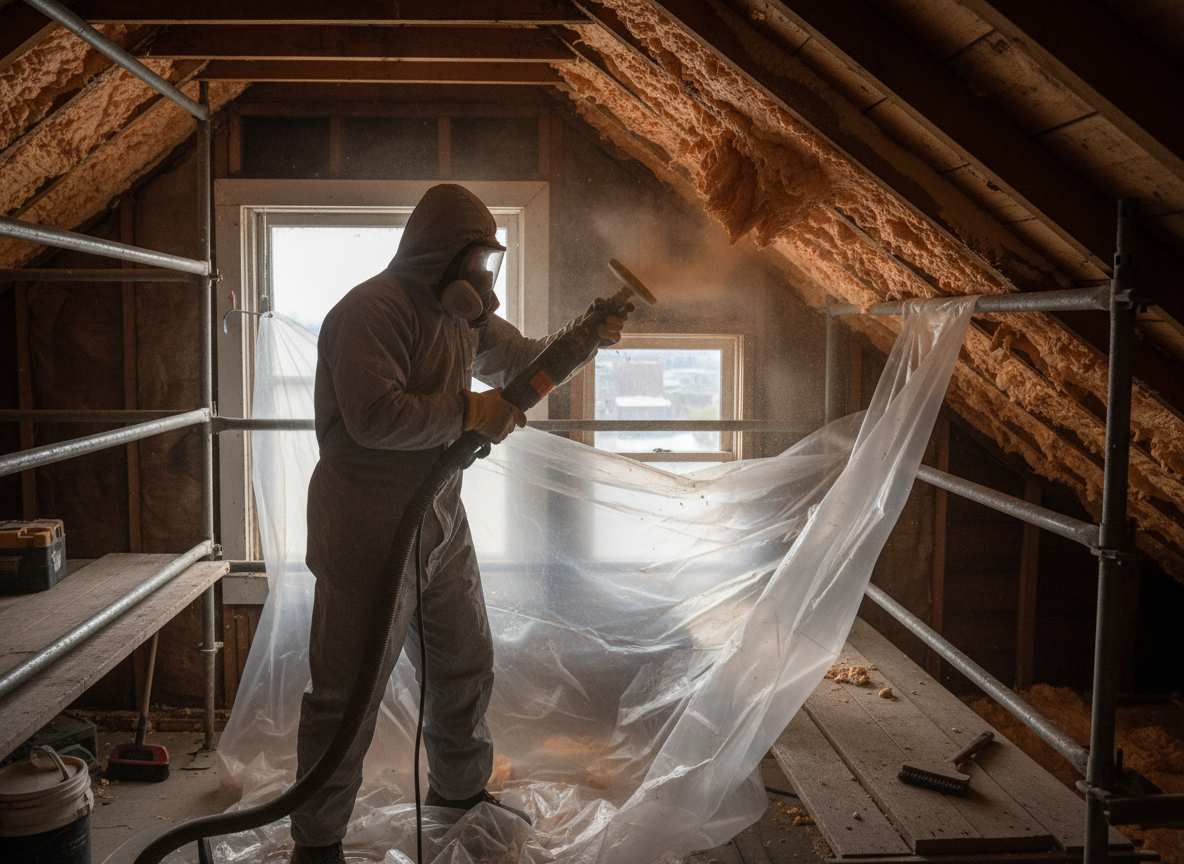
Thermal spray foam in Boston lofts often fails when moisture from the fenland climate becomes trapped against rafters and joists. Older terraces and semis around South Street and the market area commonly have this insulation applied over original lath and plaster ceilings or directly onto timber. Removal requires careful sectioning to avoid disturbing asbestos-containing materials sometimes present in pre-1980s builds and to prevent dust migration into living spaces below.
The flat terrain and high water table around Boston mean many properties experience seasonal damp that makes foam adhere more strongly to surfaces. Technicians must work in sections, using negative air machines to contain particles, then bag waste for licensed disposal. Attempting DIY removal in these conditions frequently leaves residue that later causes staining or renewed condensation once the property is re-insulated with breathable materials.
Edge cases include foam installed in cavity walls of 1960s estates near the A16 where bridging has already occurred. Full removal here demands access through external brickwork followed by cavity cleaning before any new insulation is considered. Homeowners in the PE21 postcode often discover the original foam was applied without ventilation gaps, so the job includes restoring airflow at eaves and ridge level to meet current building standards.
Technician insight
In Boston, the thing that catches most people out with thermal spray foam removal is how the damp fenland air makes the foam bond tightly to joists in pre-war terraces near the river, so you have to work slower and accept that some timber surfaces will need extra cleaning before any new insulation goes in.
Loft Foam Removal in 1930s Semi
Homeowner in a South Street terrace reported persistent condensation. Inspection showed closed-cell foam applied directly to rafters with no eaves ventilation. We sectioned the foam, contained dust, removed it, and restored airflow at the ridge. Condensation issues resolved after re-roofing with breathable membrane.
How it works
- 1
Site Assessment
Inspect loft or wall cavities, check for moisture damage, and identify any hazardous materials in Boston properties.
- 2
Containment Setup
Seal work areas with sheeting and negative pressure units to protect living spaces from dust and debris.
- 3
Foam Extraction
Cut and remove foam in controlled sections, separating it from timber and plaster without structural damage.
- 4
Waste Disposal And Cleanup
Bag all waste for licensed removal, vacuum residues, and restore ventilation paths before handover.
Pricing
Cost depends on access, foam depth, and property age; upfront quotes provided after inspection.